Honoring Louisiana Legends
Opelousas, La. – The 2026 Legends Night Honor Awards are set for June 6 at Evangeline Downs Racetrack and Casino in Opelousas, La. The honorees are Joe Adcock, Dale Angelle, Kerwin Clark, John Franks, Eric Guerin and Abe Hawkins.
Legends Night also features six races with total purses of $600,000 for accredited Louisiana breds.
JOE ADCOCK
Breeder
8 years leading Louisiana breeder
17 years on the LTBA board of directors
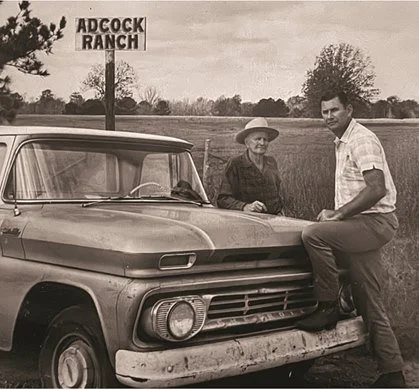
Baseball was in his name, but horses were in his blood. Major league veteran and Louisiana Sports Hall of Fame member Joe Adcock, Joe Adcock lettered for one season at Louisiana State University in 1947 before going pro.
Joe wore the uniform of four teams, hit 336 home runs (despite several injuries) — including an MLB record four round trippers in one game. A career highlight came in May 26, 1959 in a game between the Pittsburgh Pirates and Milwaukee Braves. Harvey Haddix of the Pirates carried a perfect game into the 13th inning. An error put a runner on base and Joe Adcock had the game winning hit to end the game, beating one of the greatest pitching performances in baseball history.
When Joe retired from baseball in 1969 after a couple of managerial jobs, he went home to Coushatta and Red River Farms.
“He had horses during his baseball career, but not thoroughbreds,” Jay said.
Joe was namedtop Louisiana breeder by the Louisiana Thoroughbred Breeders Association eight times. He also bred no less than eleven Accredited Louisiana Bred Champions, most of which won championship honors for their two-year-old careers.
He died in 1999, at the young age of 71. But Jay continued his father’s legacy — and has built one of his own. Jay and Red River Farms have won seven top state breeder awards, including five straight from 1997-2001.
Ask 10 breeders what gives a foal the best chance to be a winner, and you’re likely to get 10 different answers. But Jay will give you the same answer each time you ask.
“Pedigree. Blood. My dad told me a long time ago, ‘Son, when they turn for home, unless you’ve got some good blood flowing through the veins, you’re going to get run over down the lane.’ I honestly believe that’s true.”
DALE ANGELLE
Trainer
1891 wins from 10,358 starts
Top 50 in wins 2001 and 2002
Top earner No It’s Not over $300,000
16 runners earned over $100,000
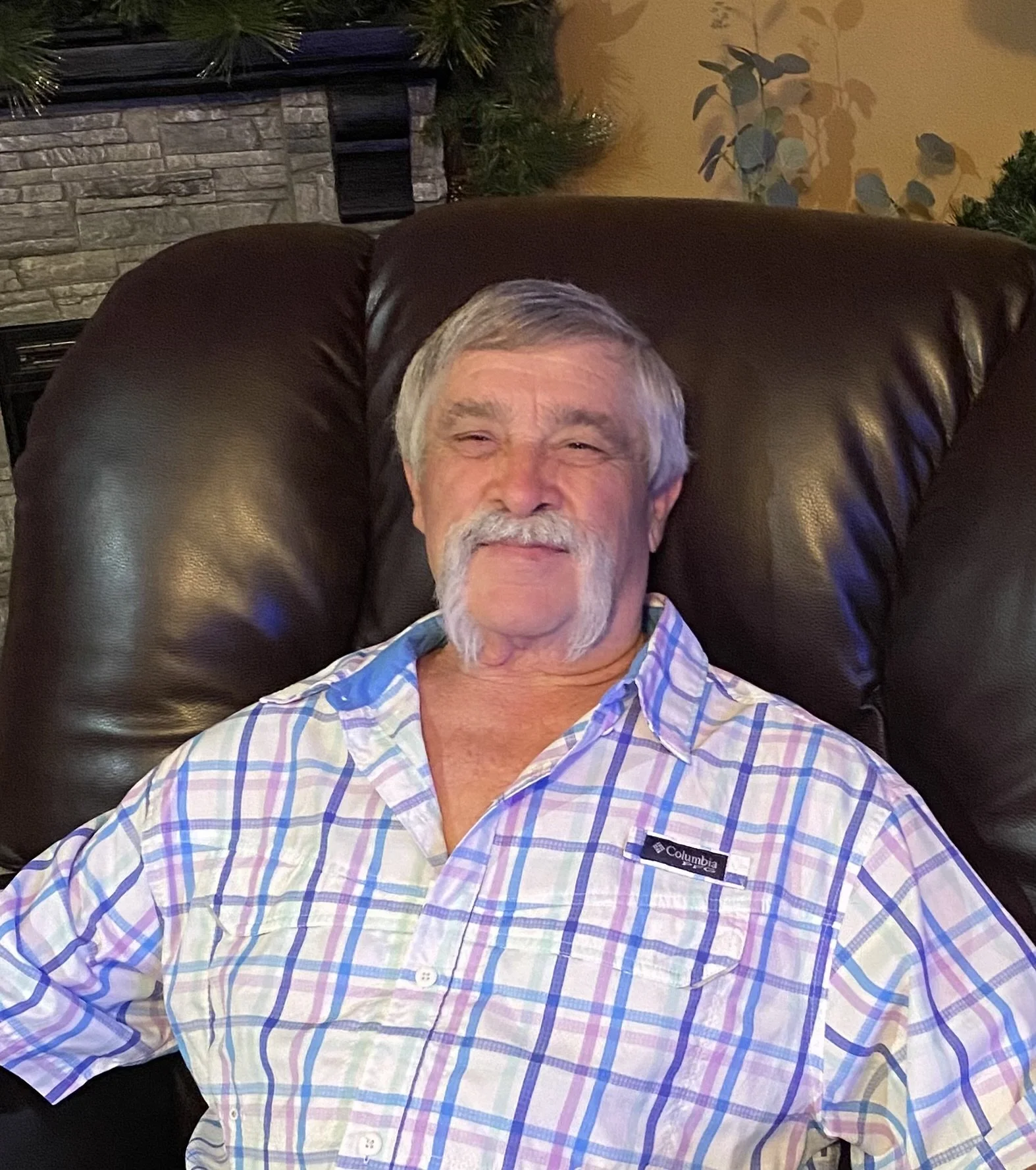
Dale Angelle, well known EVD trainer and was "Mr. Evangeline Downs" for many years. He gave many a jockey their start at Evangeline Downs.
At 11, Brian Hernandez, Jr. started galloping horses in the morning for trainer Dale Angelle at his farm in Scott, Louisiana.
"That’s when we really started learning about horses and learning how to ride racehorses the right way," Hernandez said.
"Dad and Mr. [Dale] Angelle taught me and Colby not just how to ride but how to work with horses," Brian said.
With the elder Hernandez working as a main rider for trainer Dale Angelle, his son started working on the farm. From 12 to 18, he galloped runners for Angelle and learned to master his craft while breezing horses in training.
KERWIN “Boo Boo” CLARK
Jockey
3152 career wins from over 25,000 mounts
Over $56,000,000
2015 Ashland and Kentucky Oaks—Lovely Maria
1992 Omaha Gold Cup –Hold Old Blue
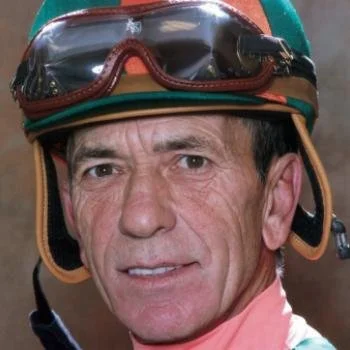
Kerwin "BooBoo" Clark was one of the best riders in the 80s. Many jockeys learned the trade from him including Mark Guidry and Shane Sellers.
Having ridden over 3,000 winners during a long career, Kerwin "Boo Boo" Clark was content with his decision and ready to retire in 2020.
Beginning in 1975, racing took him all across the country, from Louisiana to Illinois to Delaware, even halfway across the world to Saudi Arabia for four years. He reached heights only a select number of riders get to experience, including a mount in the 2011 Kentucky Derby Presented by Yum! Brands (G1) at Churchill Downs, where he rode longshot Decisive Moment to finish 14th for trainer Juan Arias.
Yet it was another race at Churchill Downs four years later for which the jockey is remembered. The rider's most important victory came at age 56, guiding Lovely Maria to victory in the Longines Kentucky Oaks (G1) for trainer Larry Jones and former Kentucky Gov. Brereton Jones, her owner and breeder.
Still, he does not call the Oaks his proudest moment. Rather, it is for a contribution that he hopes will benefit the safety of other riders now that his career in the saddle has passed. Clark was disappointed by the amount of time it took for him to be transported to a New Orleans hospital after breaking ribs, his jaw, and suffering a collapsed lung in a multiple-horse spill at Fair Grounds Race Course & Slots on March 15, 2018. He said he worked for six months with track officials and the Louisiana State Racing Commission that ultimately led to Fair Grounds, Delta Downs, and Evangeline Downs adding two ambulances for racing, allowing emergency staff to immediately transfer a rider to a hospital and not have to wait for a back-up ambulance to arrive.
Although Larry Jones did not have a horse involved in the spill, he visited Clark in the hospital after the incident to check on him.
"I was even talking to him about retirement at that time," Jones recalled. "And he told me, 'Larry, I don't want to think I have to do any more than I've already done. I just want to go out on my own terms. I don't want it to be because a horse went down and I never rode again. I want to call it quits on my terms.'”
That time finally came the spring of 2020. He last rode March 19 at Fair Grounds, guiding Lady Hopper to a 10th-place finish, ending a career in which he won 3,152 races and more than $56 million in North America.
JOHN FRANKS
Owner/Breeder
Eclipse Award winning owner 1983, 1984, 1993, 1994
Fair Grounds Hall of Fame 1992
Owner 1998 BC Juvenile winner Answer Lively
Top Horses:
Royal Anthem, Sharp Cat, Heatherten, Kissin Kris
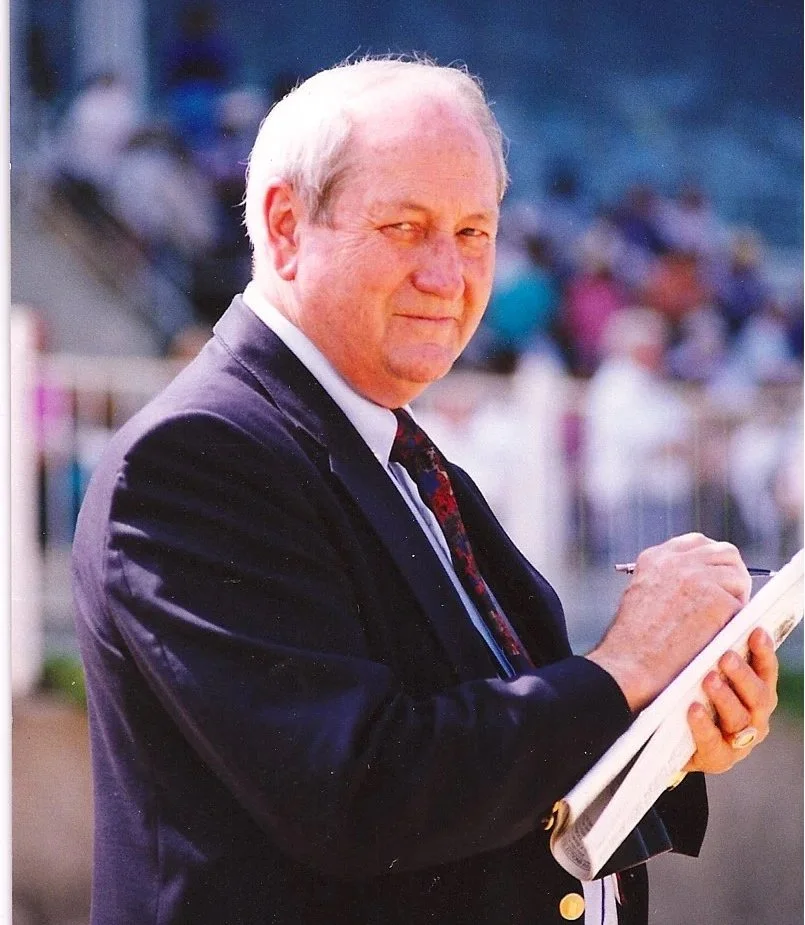
John Franks, a self-made oil magnate, was a pillar not only in his home town of Shreveport, but also in racing, where he is the only person to win four Eclipse Awards as outstanding owner. He picked up his fifth Eclipse Award in 1998 when his homebred Answer Lively won the Breeders' Cup Juvenile and was voted champion 2-year-old colt.
He became involved in racing in 1980, when he purchased a broodmare. "I really got into it just as a hobby," Franks said in a 2001 interview with Daily Racing Form. "But when Alta's Lady became a multiple stakes producer, that was the start of it all. I became really interested."
Franks's racing empire grew substantially over the next decade, and at the time of his death in -----, he had more than 500 horses, with 120 of them racing with a variety of trainers throughout North America.
Franks was North America's leading owner of the year by wins six times (1983-84, 1986-1989) and by earnings five times (1983-84, 1986, 1993-94). He was the leading breeder by wins nine times (1988-1996) and by earnings once (1993).
In 2003, Franks ranked as North America's fourth-leading owner in wins with 143, and was the seventh-leading owner in earnings with $4,077,950. As a breeder, he ranked second in wins, earnings, and stakes victories.
They were prophetic words. In addition to Answer Lively, Barnett trained Grade 1 winners Halo America and Precocity for Franks, as well as such stakes winners as Littlebitlively and Parisian Flight.
ERIC GUERIN
Jockey
2700 wins from 20,131 career starts
Over $17,000,000 in earnings
1942 nation’s leading apprentice
1944 part of the Aqueduct Carter Handicap triple dead heat
Regular rider for Native Dancer
1972 Hall of Fame
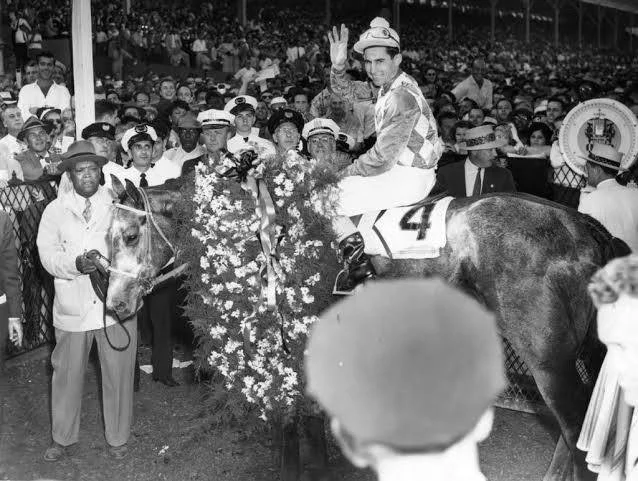
Eric Guerin won nearly 2,700 races as a jockey to earn a niche in the National Museum of Racing Hall of Fame, but he is best remembered for a race in which his horse finished second.
Guerin lost only one race in 21 races aboard Native Dancer, but that race—a second-place finish behind Dark Star in the 1953 Kentucky Derby—prevented the gray colt from joining an elite group of triple crown winners.
Native Dancer was the nation’s champion two-year-old in 1952 and three-year-old in 1953.
The 1953 Kentucky Derby remains one of the biggest disappointments in Guerin’s 34-year riding career.
“He got bumped going around the first turn and got bothered quite a bit,” he recalled. “He just couldn’t get up and got beat a head.”
Guerin had plenty of success on other horses, too. He won the 1954 Belmont with High Gun, becoming the first Jockey to score back-to-back victories in the Belmont since Eddie Arcaro did it in 1941 and 1942. He also won the Kentucky Derby on Jet Pilot.
At 5 feet, 4 inches, Guerin was unusually tall for a jockey. He was born in 1924 at Maringouin, La. Guerin was a regular rider at the Fair Grounds track in New Orleans in the 1940s. He won many important races there, including the Thanksgiving Handicap in 1942, 1946 and 1968, the 1945 New Year’s Handicap with Fox Brownie, the 1946 Louisiana Handicap with Flareback, the inaugural Kenner Stakes with Nearway and the 1956 New Orleans Handicap with Find.
He started riding in 1940, at the age of 16, and retired in 1974 after nearly 2,700 victories in more than 20,000 mounts. His horses won over $17 million in purses, finishing in the money in nearly 4,00 races.
Guerin ranked among the top five riders in the nation five years in a row.
At the age of 60, Guerin was an assistant trainer for Richard Niemenski at New York’s Belmont Park when he was inducted into the Louisiana Sports Hall of Fame.
ABE HAWKINS
Jockey
Former slave on Ashland Sugar Plantation in Darrow, Louisiana turned jockey
1865 regarded as the “second best known athlete in the country”
25 career wins including 1866 Travers Stakes with Merrill
2024—Hall of Fame induction by Historic Review Committee
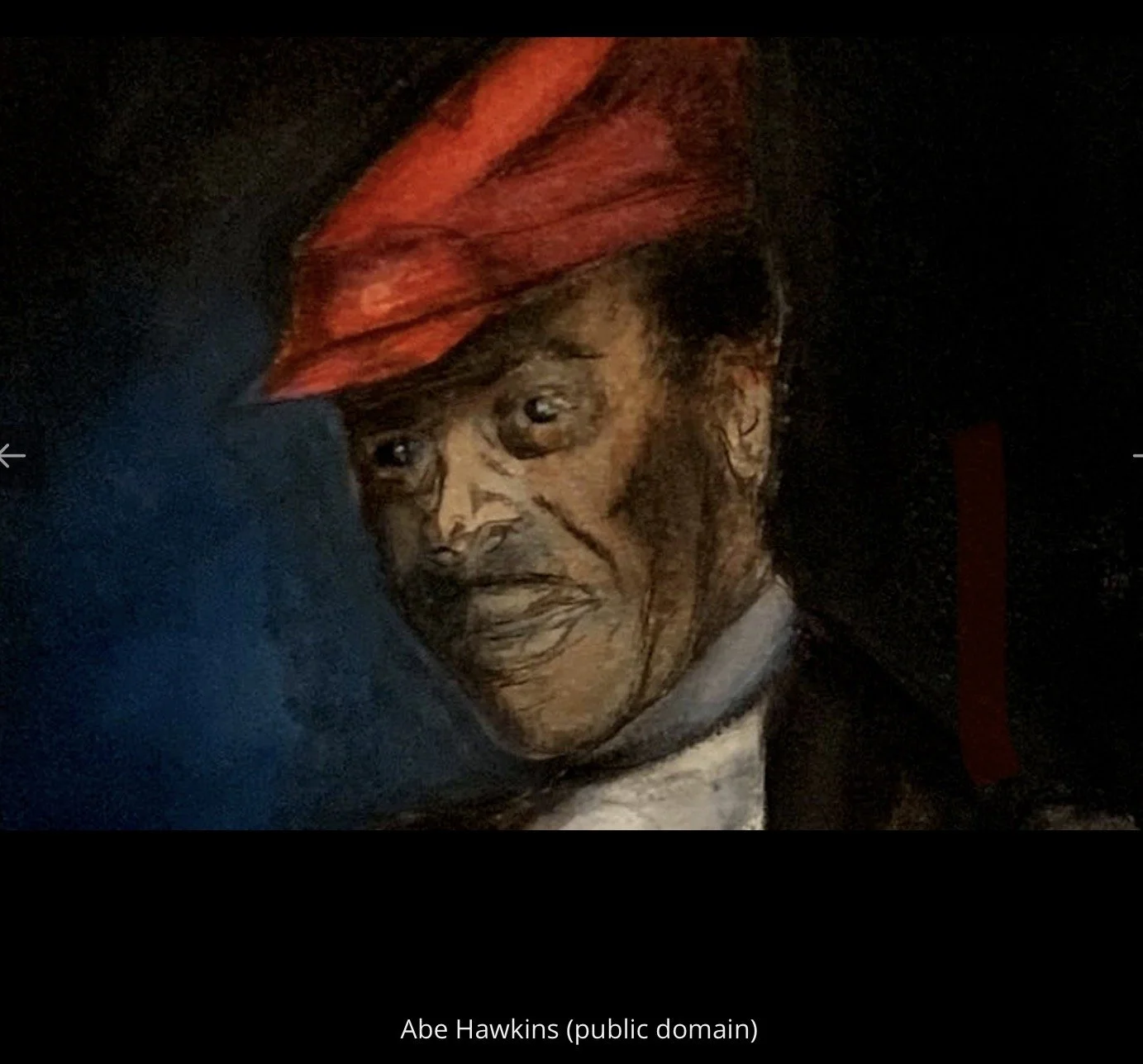
Abe Hawkins was one of the most talented and accomplished American athletes both before and in the immediate aftermath of the Civil War, Hawkins was revered for his exceptional skills as a jockey. He won major events, set records, received praise in the press, and had his innovative riding style popularized by jockeys of subsequent generations.
Those triumphs and glories, however, were juxtaposed against a difficult reality — Hawkins was an enslaved person for much of his life and there are numerous gaps in his story. Many of his most celebrated achievements as a jockey occurred while he was the property of wealthy southern slaveholder Duncan F. Kenner, one of the most prominent breeders and owners of racehorses in the country.
Little is known about Hawkins other than his athletic accomplishments. The date and location of his birth has never been discovered and there are no records about his family or even his last name. When he became a rider in the early 1850s, he was referred to simply as “Abe” or “Old Abe.”
Hawkins was initially mentioned in press accounts at the Metairie Course in New Orleans in 1851. He was praised for his talent, intelligence, and honesty. Hawkins had developed into one of the best in the sport by the time he etched his name into history at Metairie in April 1854. The legacy-defining event for Hawkins came shortly after he was purchased by Kenner for the considerable sum of $2,300.
Northern Louisiana horseman Gen. T. J. Wells entered his horse Lecomte in a $2,000 Jockey Club purse, which also featured the mighty Lexington. Lexington was undefeated at the time and generally considered peerless. A week earlier, he easily defeated Lecomte in the Great State Post Stakes. Lecomte’s trainer, an enslaved person known only as Hark, convinced Wells to use Kenner’s jockey against Lexington.
With Hawkins aboard, riding at 89 pounds, Lecomte shockingly defeated Lexington in consecutive four-mile heats. In winning the first heat by six lengths, Lecomte completed the distance in 7:26. The dazzling time was more than six seconds faster than the previous standard set by Hall of Famer, Fashion a dozen years earlier. Lecomte finalized the victory in the second heat with a four-length score in 7:38¾. It was the only defeat of Lexington’s career.
For the next decade, Hawkins rode with distinction while enslaved at Ashland, the Louisiana plantation owned by Kenner. Ashland was a sugarcane operation and thoroughbred nursery that also featured a training track for Kenner’s racing stable.
Hawkins was a major reason his owner’s racing stable was “acknowledged to be the strongest in the South,” according to an 1859 Spirit of the Times article. Among the top horses Hawkins rode to victory for Kenner were the undefeated colt Whale and the standout filly Minnehaha.
With his victory against Lexington and the continued success that followed, Hawkins became known in the press as “The Black Prince,” “The Dark Sage of Louisiana,” and “The Slayer of Lexington.” He was arguably the most famous and successful jockey in America prior to Isaac Murphy, as well as the first Black athlete to gain national notoriety.
The Civil War and Emancipation Proclamation gave Hawkins his liberation. The Union Army seized New Orleans in the spring of 1862, confiscating much of Kenner’s property and freeing his slaves. Hawkins made his way north for riding opportunities and won a documented 25 races from 1864 through 1866.
Kenner regained his land after the war in the early days of Reconstruction. He invited Hawkins to return at Ashland as a free man, which he did late in the fall of 1866.
Old Abe died of consumption on May 27, 1867, and his body was shipped back to Ashland. Kenner buried him, not in the property’s slave cemetery, but in a brick tomb under a live oak tree that overlooked the plantation’s training track.
Hawkins was gone, but his legacy as arguably the premier jockey of his time lived on. His riding techniques — making use of short stirrups and a crouching posture — later came to be known as the “American seat.”